Indira Gandhi Centre for Atomic Research designs reactors that produce more fuel than they burn. That idea, called breeding, sits at the heart of India’s long-term nuclear energy plan, and IGCAR has spent more than half a century making it work. The centre is based at Kalpakkam on the Tamil Nadu coast, south of Chennai, and operates under the Department of Atomic Energy (DAE). Its biggest project, the 500 MWe Prototype Fast Breeder Reactor (PFBR), reached first criticality in April 2026. It was built by BHAVINI to IGCAR’s design, with more than 200 Indian companies contributing parts and services. IGCAR’s scientists and engineers work on reactor physics, liquid-sodium engineering, radiation-resistant materials, fuel reprocessing, and nuclear safety, and they train the next generation of fast-reactor specialists.
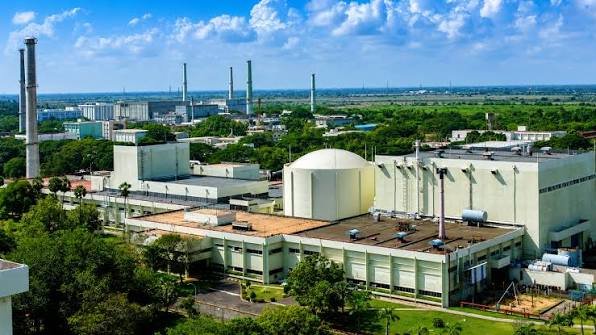
| Quick Facts | Details |
| Full name | Indira Gandhi Centre for Atomic Research (IGCAR) |
| Postal address | IGCAR, Kalpakkam, Chengalpattu District, Tamil Nadu 603102, India |
| Parent body | Department of Atomic Energy, Government of India |
| Director | Shri Sreekumar G. Pillai |
| Began as | Reactor Research Centre (RRC), 1971 |
| Present name since | 1985 |
| Core purpose | Science and engineering of sodium-cooled fast breeder reactors and their fuel cycle |
| Research reactors on site | Fast Breeder Test Reactor (FBTR, first criticality 1985); KAMINI (30 kWt, uranium-233 fuelled, first criticality 1996) |
| Flagship design | Prototype Fast Breeder Reactor (PFBR), 500 MWe, pool-type, sodium-cooled |
| PFBR builder and operator | BHAVINI (Bharatiya Nabhikiya Vidyut Nigam Ltd.) |
| PFBR construction start | 2004 |
| PFBR first criticality | 6 April 2026 |
| PFBR final cost (reported) | About ₹8,181 crore, against an original budget of about ₹3,492 crore |
| Industrial participation | 200+ Indian industries, including MSMEs |
| Next reactors planned | Twin FBR-1 and FBR-2 units (improved FBR-600 design) at Kalpakkam |
| Training link | BARC Training School, Kalpakkam campus; constituent institution of Homi Bhabha National Institute |
| Public access | Restricted high-security site |
| Distance from Chennai | Roughly 70 km along the East Coast Road |
| Nearby heritage site | Mamallapuram (Mahabalipuram), a UNESCO World Heritage Site |
| Time zone | IST, UTC+5:30 (no daylight saving) |
| Official website | igcar.gov.in |
How a Breeder Reactor Makes More Fuel Than It Uses
Most of the world’s nuclear reactors are “thermal” reactors. They slow neutrons down with water or heavy water, and they use only a tiny fraction of the uranium in their fuel. Fast breeder reactors work differently:
- Fast neutrons: Neutrons are not slowed down, so the reactor uses no water moderator.
- Liquid sodium coolant: Sodium carries heat away efficiently without slowing neutrons. It melts at about 98°C and stays liquid over a wide temperature range.
- Breeding: Surplus neutrons convert uranium-238, which does not normally sustain a chain reaction, into plutonium-239, which does. The reactor can create more fissile material than it consumes.
- Thorium for later: The same principle, applied to a thorium “blanket” around the core, can breed uranium-233, the fuel India plans to use in its third stage of nuclear power.
PFBR uses a pool-type design. The entire primary sodium system sits inside one large tank, and a separate secondary sodium loop carries heat to the steam generators. This keeps radioactive primary sodium contained within the reactor vessel.
The Kalpakkam Nuclear Complex at a Glance
IGCAR is one of several nuclear establishments clustered at Kalpakkam:
| Facility | Operator | Role |
| IGCAR | Department of Atomic Energy | Research, design, and development for fast reactors |
| FBTR and KAMINI | IGCAR | Test and research reactors |
| Madras Atomic Power Station (MAPS) | NPCIL | Two 220 MWe pressurised heavy water power reactors (first stage) |
| PFBR | BHAVINI | 500 MWe fast breeder power reactor (second stage) |
| BARC facilities | Bhabha Atomic Research Centre | Fuel reprocessing and waste management |
| DAE township | Department of Atomic Energy | Housing, schools, and services for staff |
Five Decades in Brief
| Year | Event |
| 1971 | Reactor Research Centre set up at Kalpakkam |
| 1985 | FBTR reaches criticality using an Indian-developed plutonium-uranium carbide fuel; centre renamed IGCAR |
| 1996 | KAMINI, fuelled by uranium-233, reaches criticality |
| 2003 | BHAVINI created to build and operate fast breeder power reactors |
| 2004 | PFBR construction begins |
| 4 March 2024 | PFBR core loading begins |
| 6 April 2026 | PFBR attains first criticality |
Inside IGCAR: Disciplines and Why They Matter
| Discipline | Why Fast Reactors Need It |
| Reactor physics | Predicting neutron behaviour, power distribution, and breeding performance in the core |
| Thermal hydraulics | Making sure heat is removed safely under normal conditions and during accidents |
| Sodium technology | Sodium reacts strongly with water and air, so handling, purification, and leak detection need specialist know-how |
| Metallurgy and materials | Core components face intense heat and neutron bombardment, so special steels and alloys must last for years |
| Fuel chemistry and fabrication | Designing and qualifying fuels such as mixed oxide and carbide fuels |
| Reprocessing | Recovering plutonium and uranium from spent fuel, which breeding depends on |
| Electronics and instrumentation | Sensors and control systems that must work in harsh, radioactive environments |
| Robotics and remote handling | Tools for inspecting and repairing equipment where people cannot go |
| Non-destructive evaluation | Finding tiny flaws in welds and components without damaging them |
| Radiological and environmental safety | Monitoring radiation around Kalpakkam and supporting emergency preparedness |
PFBR by the Numbers
- 500 MWe of planned electrical output, enough for several lakh homes once fully operational
- 22 years from construction start (2004) to first criticality (2026)
- About ₹8,181 crore reported final cost, more than double the original budget
- 200+ Indian industries involved in manufacturing and construction
- Pool-type, sodium-cooled design, drawing on experience from FBTR and KAMINI
Supporters see the delays and cost overruns as the price of building a first-of-its-kind reactor entirely with Indian technology. Critics point to them as reasons for caution about scaling up. Both views are part of the public debate on India’s fast reactor programme.
What Happens After Criticality
Reaching criticality is the beginning of a reactor’s operating life, not the end of the project:
- Low-power physics tests confirm that the core behaves as the designers predicted.
- Stepwise power increases follow, with safety checks at each stage.
- Grid connection requires regulatory approval from the Atomic Energy Regulatory Board (AERB).
- Commercial operation was targeted for around September 2026. Check the latest updates from the DAE or BHAVINI for the current status.
- Next reactors: Financial sanction for the twin FBR-1 and FBR-2 units at Kalpakkam is expected to depend on PFBR showing steady, reliable operation.
IGCAR supports BHAVINI throughout this phase with design expertise, analysis, and troubleshooting.
Life and Access in Kalpakkam
Kalpakkam is a small coastal town whose life revolves around the nuclear complex. The DAE township provides homes, schools, hospitals, and recreation for employees and their families.
- From Chennai: Roughly 70 km south along the scenic East Coast Road, usually about 1.5–2 hours by road.
- By rail: Chengalpattu Junction is the nearest major railway station, with onward travel by road.
- By air: Chennai International Airport is the nearest airport.
- Nearby: The temples and rock-cut monuments of Mamallapuram are a short drive north.
Access: IGCAR is a high-security facility. Entry is only with prior authorisation, and photography near nuclear installations is restricted. Educational visits are arranged through official channels.
Pathways into IGCAR
- Scientific officers: Mostly recruited through the BARC Training School, including its Kalpakkam campus. Engineering and science graduates are selected nationally and trained for about a year.
- Research scholars: PhD opportunities through Homi Bhabha National Institute, working on real fast-reactor problems.
- Technical and support staff: Recruited through IGCAR’s own advertised notifications.
- Students and interns: Short research projects and training programmes for university students, announced periodically.
Rely only on official IGCAR and DAE websites for recruitment information, and never pay agents for jobs.
Frequently Asked Questions
Q1. Where is IGCAR located?
At Kalpakkam, Chengalpattu District, Tamil Nadu 603102, about 70 km south of Chennai.
Q2. What is a fast breeder reactor?
It is a reactor that uses fast neutrons and liquid sodium coolant, and it can produce more nuclear fuel than it consumes.
Q3. What reactors does IGCAR operate?
IGCAR operates the Fast Breeder Test Reactor (FBTR) and the KAMINI research reactor.
Q4. Who built the PFBR?
IGCAR designed it, and BHAVINI built it and operates it.
Q5. When did PFBR reach criticality?
On 6 April 2026.
Q6. How much did the PFBR cost?
Its final cost has been reported at about ₹8,181 crore, against an original budget of about ₹3,492 crore.
Q7. What comes after PFBR?
Two improved fast breeder units, FBR-1 and FBR-2, are planned at Kalpakkam.
Q8. Is IGCAR the same as BARC?
No. Both are under the Department of Atomic Energy, but IGCAR focuses on fast reactors at Kalpakkam, while BARC is headquartered at Trombay, Mumbai.
Q9. Can tourists visit IGCAR?
No. It is a restricted facility, and visits are allowed only with prior authorisation.
Q10. Who heads IGCAR?
Shri Sreekumar G. Pillai is the Director.