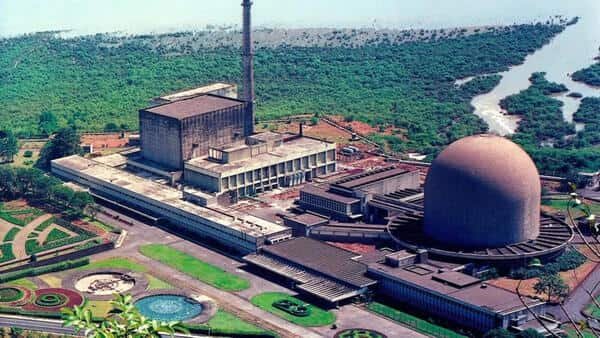
Bhabha Atomic Research Centre switched on Asia’s first research reactor, APSARA, in August 1956, less than a decade after India’s independence. That reactor at Trombay, on the eastern waterfront of Mumbai, marked the start of India’s nuclear programme. Today, the Bhabha Atomic Research Centre (BARC) is India’s main multi-disciplinary nuclear research institution. It works on reactors and nuclear fuel, radiation medicine, crop breeding, water purification, and national security. It operates under the Department of Atomic Energy (DAE), trains most of the country’s nuclear scientists and engineers through its Training School, and runs campuses well beyond Mumbai. BARC is not a public-facing hospital or office like the institutions usually covered in this series, but its work reaches ordinary citizens every day, through cancer treatment, safer food, and improved crops.
| Quick Facts | Details |
| Full name | Bhabha Atomic Research Centre (BARC) |
| Address | Trombay, Mumbai, Maharashtra 400085, India |
| Area | Trombay, next to Anushaktinagar township, eastern Mumbai |
| Established | 3 January 1954, as the Atomic Energy Establishment, Trombay (AEET) |
| Renamed | BARC in January 1967, after the death of founder Homi J. Bhabha in 1966 |
| Founder | Dr. Homi Jehangir Bhabha |
| Parent body | Department of Atomic Energy, Government of India |
| Current Director | Shri Vivek Bhasin, 14th Director (since 15 September 2023) |
| Budget | About ₹4,887 crore allocated for 2026–27 (reported) |
| First research reactor | APSARA, criticality on 4 August 1956, Asia’s first |
| Major research reactor | DHRUVA (1985) |
| Upgraded research reactor | APSARA-U (criticality 2018) |
| Key research areas | Reactor technology, nuclear fuel cycle, chemistry, physics, materials science, biosciences, radiation medicine, electronics and instrumentation, environmental monitoring, national security |
| Main campus outside Mumbai | Facilities in Tarapur, Kalpakkam, Mysuru, Challakere, Visakhapatnam, and other sites |
| Medical service | Radiation Medicine Centre, Parel, Mumbai (nuclear medicine) |
| Education | BARC Training School; constituent institution of Homi Bhabha National Institute (HBNI) |
| Entry scheme for scientists | OCES and DGFS programmes |
| Public access | High-security facility; entry only with prior authorisation |
| Nearest suburban stations | Mankhurd, Govandi, and Chembur (Harbour Line) |
| Nearest airport | Chhatrapati Shivaji Maharaj International Airport, roughly 12–15 km |
| Time zone | IST, UTC+5:30 (no daylight saving) |
| Official website | barc.gov.in |
From Atomic Energy Establishment to BARC
Homi J. Bhabha, a physicist trained at Cambridge, believed India needed its own nuclear science to produce electricity and develop technology. In January 1954, the government set up the Atomic Energy Establishment, Trombay with Bhabha as its head. Construction on the Trombay site moved quickly. APSARA, a small swimming-pool-type research reactor built with Indian effort, reached criticality in August 1956, the first research reactor in Asia.
More reactors followed. CIRUS started in 1960, built with Canadian cooperation. The ZERLINA and PURNIMA series were used for reactor physics experiments. In 1985, the much larger DHRUVA reactor went into operation. It remains one of BARC’s main sources of neutrons for research and isotope production.
Bhabha died in an air crash in the Alps in January 1966. A year later, the establishment was renamed the Bhabha Atomic Research Centre in his honour.
BARC’s scientists and engineers were central to India’s nuclear tests in 1974 and 1998, and the centre continues to support the country’s strategic programme. Alongside this, it has built a wide civilian research portfolio in energy, health, agriculture, and industry.
Location: Trombay, Mumbai
BARC occupies a large, largely wooded site at Trombay on Mumbai’s eastern shoreline, facing the harbour and Thane Creek. The adjoining Anushaktinagar township houses many BARC and DAE employees and their families.
- Postal address: Bhabha Atomic Research Centre, Trombay, Mumbai 400085
- Nearest suburban stations: Mankhurd, Govandi, and Chembur on the Harbour Line
- By road: Via the Eastern Express Highway, Sion–Trombay Road, and Chembur
- From the airport: Roughly 12–15 km, typically 30–60 minutes depending on traffic
Can the public visit BARC? Not freely. BARC is a high-security installation, and entry needs prior authorisation. Photography is prohibited near sensitive areas. Visits by schools, colleges, and other institutions are arranged only through official channels, and BARC sometimes holds exhibitions and outreach events. If you are a student or teacher, contact BARC’s official public awareness or outreach channels. Do not simply turn up at the gate.
How BARC Is Organised
BARC is organised into groups, each containing several divisions that focus on specific fields. The structure changes from time to time, but the main areas include:
- Reactor engineering and operations: Design, safety, and operation of research reactors and support for India’s power reactor programme
- Nuclear fuels: Development and fabrication of fuel for research and power reactors, including advanced fuels for fast reactors
- Nuclear recycling: Reprocessing of spent fuel and management of radioactive waste
- Chemistry and radiochemistry: Analytical chemistry, radiation chemistry, and isotope production
- Physics: Nuclear, condensed matter, laser, and accelerator physics
- Materials science: Metallurgy, advanced materials, and structural integrity
- Biosciences: Radiation biology, crop improvement, food technology, and medical applications
- Electronics and instrumentation: Control systems, radiation detectors, and computing
- Health, safety, and environment: Radiation protection, environmental monitoring, and emergency preparedness
- Knowledge management and technology transfer: Training, documentation, and licensing technologies to industry
Research Reactors and Major Facilities
| Facility | Started | Role |
| APSARA | 1956 | Asia’s first research reactor; used for research and training until its upgrade |
| CIRUS | 1960 | Research reactor used for isotopes and experiments; shut down in 2010 |
| ZERLINA | 1961 | Zero-energy reactor for reactor physics experiments (later decommissioned) |
| PURNIMA series | 1970s onwards | Experimental reactors for reactor physics research |
| DHRUVA | 1985 | High-power research reactor for neutron research and isotope production |
| APSARA-U | 2018 | Upgraded version of APSARA with higher power, used for research and isotope production |
Besides reactors, BARC runs particle accelerators, isotope production plants, radiochemistry laboratories, fuel fabrication facilities, and large computing and engineering workshops.
Services That Reach Ordinary Citizens
Although it’s a research centre, BARC’s work shows up in everyday life:
- Nuclear medicine. BARC’s Radiation Medicine Centre, located in Parel, Mumbai, near Tata Memorial Hospital, provides diagnostic scans and radioisotope treatments. These include radioactive iodine therapy for thyroid disorders and thyroid cancer.
- Medical isotopes. Isotopes produced in BARC’s reactors are used in hospitals across India for cancer diagnosis and treatment. Distribution to hospitals and industry is handled through the DAE’s Board of Radiation and Isotope Technology (BRIT).
- Improved crop varieties. BARC scientists have used radiation-induced mutation to develop several dozen crop varieties released for farmers. These include varieties of groundnut, mustard, pulses, and rice that are grown across India.
- Food preservation. Radiation processing extends the shelf life of food and reduces losses. BARC’s technology is used at facilities such as the KRUSHAK plant at Lasalgaon in Nashik district, which helps preserve onions.
- Clean water. BARC has developed desalination and water purification technologies, including membrane-based filters for home and community use, many of which have been licensed to industry.
- Waste to energy. The Nisargruna biogas technology converts kitchen and biodegradable waste into biogas and manure.
- Technology transfer. BARC licenses a wide range of technologies, from instruments to industrial processes, to Indian companies.
- Radiation monitoring. BARC runs environmental radiation monitoring networks and supports national preparedness for radiological emergencies.
Campuses Beyond Trombay
The Trombay campus is the headquarters, but BARC has facilities in several other places, including:
- Tarapur, Maharashtra: Nuclear recycling and fuel-related facilities near the Tarapur Atomic Power Station
- Kalpakkam, Tamil Nadu: Facilities connected to the fuel cycle and fast reactor programme
- Mysuru, Karnataka: Specialised materials and plant facilities
- Challakere, Karnataka: A large site in Chitradurga district being developed for future facilities
- Visakhapatnam, Andhra Pradesh: A newer campus for research facilities
BARC also runs smaller field stations for seismic monitoring, atmospheric studies, and other research.
Careers and Education at BARC
BARC Training School is how most of BARC’s scientific officers join. Its main entry routes are:
- OCES (Orientation Course for Engineering Graduates and Science Postgraduates): Selected candidates complete a one-year training programme and then join as scientific officers in DAE units.
- DGFS (DAE Graduate Fellowship Scheme): Candidates pursue an M.Tech or equivalent at partner institutes with DAE support, followed by a job.
Selection usually involves an online exam or GATE scores, followed by an interview. Eligibility, stipend, and exam dates change every year, so check the current notification on BARC’s official recruitment portal.
Homi Bhabha National Institute (HBNI) is a deemed-to-be university under the DAE, and BARC is one of its main constituent institutions. Through HBNI, BARC offers PhD and other postgraduate programmes.
Other recruitment: BARC also hires scientific assistants, technicians, stipendiary trainees, medical staff, and administrative staff through separate notifications.
Beware of fraud: Fake job offers and websites using BARC’s name appear from time to time. Only trust notices on BARC’s official website and recruitment portal. BARC does not charge money for jobs beyond the published application fees.
Frequently Asked Questions
Q1. What is the address of Bhabha Atomic Research Centre?
A. Bhabha Atomic Research Centre, Trombay, Mumbai, Maharashtra 400085.
Q2. When was BARC established?
A. It was set up on 3 January 1954 as the Atomic Energy Establishment, Trombay, and renamed BARC in 1967.
Q3. Who founded BARC?
A. It was founded by physicist Dr. Homi Jehangir Bhabha.
Q4. Who is the current Director of BARC?
A. Shri Vivek Bhasin, the 14th Director, who took charge on 15 September 2023.
Q5. Which ministry or department does BARC come under?
A. It comes under the Department of Atomic Energy, Government of India.
Q6. What was India’s first research reactor?
A. APSARA, which reached criticality at Trombay in August 1956, the first in Asia.
Q7. Can the public visit BARC?
A. Only with prior authorisation. Institutional visits are arranged through official channels.
Q8. Does BARC treat patients?
A. Yes. Its Radiation Medicine Centre in Parel provides nuclear medicine diagnosis and treatment.
Q9. How can I join BARC as a scientist?
A. Mainly through the OCES or DGFS programmes of the BARC Training School, based on an exam or GATE score and an interview.
Q10. Which is the nearest railway station to BARC?
A. Mankhurd, Govandi, and Chembur on Mumbai’s Harbour Line are the closest.