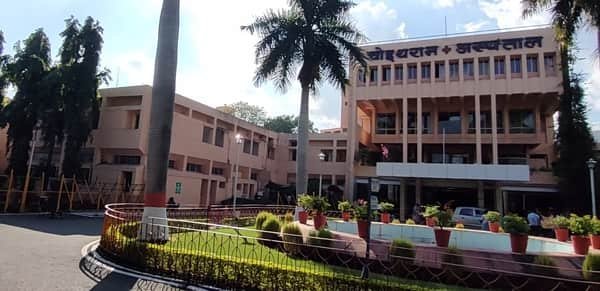
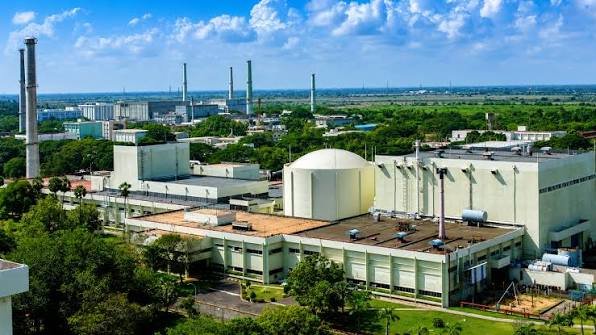
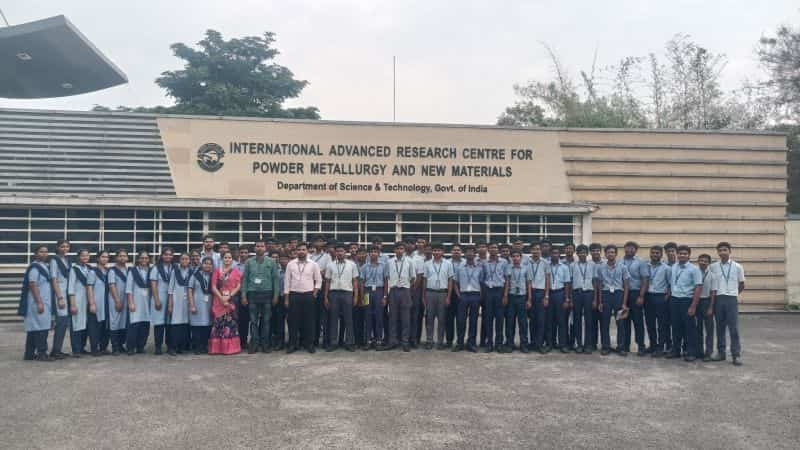
International Advanced Research Centre for Powder Metallurgy and New Materials began with a science agreement between India and the Soviet Union. It traces its roots to the Integrated Long Term Programme (ILTP) of cooperation in science and technology, signed by the two countries in the late 1980s. Known as ARCI, it is now an autonomous R&D centre of the Department of Science and Technology (DST), Government of India. Its main campus covers about 95 acres at Balapur, Hyderabad, and it has centres in Chennai and a liaison office in Gurugram. Its motto, “Translating Research to Technology,” sums up its purpose: developing advanced materials and processes and passing them on to Indian industry. Its work covers powder metallurgy, engineered coatings, advanced ceramics, laser processing, nanomaterials, fuel cells, and battery and solar energy materials.
| Quick Facts | Details |
| Full name | International Advanced Research Centre for Powder Metallurgy and New Materials (ARCI) |
| Main campus address | Balapur P.O., Hyderabad, Telangana 500005, India |
| Main campus size | About 95 acres |
| Parent body | Department of Science and Technology (DST), Government of India |
| Status | Autonomous R&D centre, funded through DST grants-in-aid |
| Origin | India–USSR Integrated Long Term Programme (ILTP), late 1980s |
| Established | Formally 1996–97. Operations began in the mid-1990s |
| Director | Dr. R. Vijay (took charge on 6 May 2024) |
| Distinguished ARCI Chair | Prof. P. Rama Rao, metallurgist |
| Motto | “Translating Research to Technology” |
| Research structure | Centres of Excellence in powder metallurgy, coatings, ceramics, laser processing, nanomaterials, carbon materials, sol-gel coatings, fuel cells, batteries, solar energy materials, and automotive energy materials |
| Chennai centres | Centre for Fuel Cell Technology (CFCT); Centre for Automotive Energy Materials (CAEM), at IIT Madras Research Park, Taramani |
| Gurugram | Liaison office |
| Key focus | Industry-oriented, application-driven R&D and technology transfer |
| Director’s office phone | +91-40-2445 2304 / 2956 1681 |
| director@arci.res.in / info@arci.res.in | |
| Nearest airport | Rajiv Gandhi International Airport, Shamshabad, roughly 15–20 km |
| Time zone | IST, UTC+5:30 (no daylight saving) |
| Official website | arci.res.in |
Born from an Indo-Soviet Science Pact
In the late 1980s, India and the Soviet Union signed the Integrated Long Term Programme (ILTP) to cooperate on science and technology. Advanced materials were one priority, and ARCI was one of the outcomes. It became operational in the mid-1990s and was formally established around 1996–97 as an autonomous centre under the Department of Science and Technology.
From the start, ARCI was meant to bridge the gap between traditional research labs and high-technology industry. Many Indian labs produced good science but struggled to turn it into products. ARCI’s job is to take materials technologies to a stage where companies can adopt them.
Metallurgist Prof. P. Rama Rao, a former DST secretary who helped set up several national institutions, has been closely associated with ARCI and now holds the Distinguished ARCI Chair. The current director, Dr. R. Vijay, took charge in May 2024.
What Is Powder Metallurgy?
Powder metallurgy makes parts from fine metal powders instead of melting and casting metal. The usual steps are:
- Producing powder, such as metal, alloy, or ceramic powder
- Shaping it by pressing it in a die or using other forming methods
- Sintering, which heats the shaped powder below its melting point so the particles bond into a solid part
This approach allows:
- Complex shapes with little machining or waste
- Special materials that are hard to make by melting, such as very hard carbides or mixed-material composites
- Controlled porosity, useful for filters and self-lubricating bearings
Powder metallurgy is used for automotive gears and bearings, cutting tools, magnets, aerospace parts, and medical implants. It is also closely linked to 3D printing of metals.
Centres of Excellence
ARCI organises its research into Centres of Excellence (CoEs). Key ones include:
| Centre | Focus |
| Centre for Advanced Powder Metallurgy (CAPM) | Metal powders, sintered components, advanced alloys |
| Centre for Engineered Coatings (CEC) | Wear- and corrosion-resistant coatings using thermal spray and other methods |
| Centre for Advanced Ceramic Materials (CACM) | Structural and functional ceramics |
| Centre for Advanced Materials & Batteries (CAMB) | Battery materials and energy storage |
| Laser materials processing | Laser welding, cladding, surface hardening, additive manufacturing |
| Nanomaterials | Nano-powders and nanostructured materials |
| Carbon materials | Carbon-based materials for energy and industry |
| Sol-gel coatings | Thin functional coatings for glass, metals, and optics |
| Solar energy materials | Coatings and materials for solar thermal and photovoltaic applications |
| Centre for Fuel Cell Technology (CFCT), Chennai | Fuel cell materials and systems |
| Centre for Automotive Energy Materials (CAEM), Chennai | Materials for electric vehicles, batteries, and automotive energy systems |
Support units include a Project Monitoring and Intellectual Property Rights (PM-IPR) cell, which handles patents and technology transfer.
From Lab to Factory: Technology Transfer
ARCI is unusual among government research centres because its R&D is deliberately industry-centric. It typically:
- Develops technologies to pilot scale, close to real production
- Licenses technologies to Indian companies, often start-ups and MSMEs
- Builds equipment in India, including coating systems, to reduce dependence on imports
- Offers “jobbing” services, coating customer parts with its unique facilities so companies can use technologies not otherwise available in India
- Protects intellectual property through patents managed by its IPR cell
For companies, this means ARCI can be a partner for both one-off technical problems and long-term technology development.
Services for Industry and Researchers
- Coating services for wear, corrosion, and heat resistance on industrial components
- Materials development for specific industrial needs
- Characterisation and testing, analysing the structure, composition, and properties of materials
- Collaborative R&D projects with companies and public-sector organisations
- Technology licensing of ARCI-developed processes and products
- Training and internships for students, researchers, and industry staff
- Research collaborations with IITs and universities, including joint PhD work
Companies interested in working with ARCI can reach the relevant centre head through the contacts listed on its website, or approach the Director’s office.
Campuses
| Location | Role | Address |
| Hyderabad (main campus) | Headquarters and most Centres of Excellence | Balapur P.O., Hyderabad 500005, Telangana |
| Chennai | CFCT and CAEM | IIT Madras Research Park, Phase 1, 2nd Floor, Section B1, Kanagam Road, Taramani, Chennai 600113 |
| Gurugram | Liaison office | Gurugram, Haryana |
Locating the Chennai centres in the IIT Madras Research Park puts them close to academic researchers and industry R&D teams working on automotive and energy technologies.
Reaching Balapur
The Hyderabad campus is at Balapur, in the south-eastern part of the city, an area with several defence and scientific research establishments.
- From Rajiv Gandhi International Airport (Shamshabad): Roughly 15–20 km, via the Outer Ring Road or city roads.
- From Secunderabad or Hyderabad (Nampally) stations: A longer cab ride across the city, depending on traffic.
- Visiting: ARCI is a research facility. Visits for business, collaboration, training, or interviews are by appointment.
Careers and Student Opportunities
- Scientists and engineers are recruited through ARCI’s advertised positions.
- Project staff and research fellows join funded projects, often with national fellowships.
- Student internships and projects are offered to engineering and science students.
- PhD research is possible in collaboration with universities and institutes.
Tip: Apply only through ARCI’s official website and advertisements. Materials science, metallurgy, ceramics, chemistry, and physics backgrounds are the most relevant.
Frequently Asked Questions
Q1. What is the address of ARCI Hyderabad?
A. Balapur P.O., Hyderabad, Telangana 500005.
Q2. What does ARCI stand for?
A. International Advanced Research Centre for Powder Metallurgy and New Materials.
Q3. Which department does ARCI belong to?
A. It is an autonomous R&D centre of the Department of Science and Technology, Government of India.
Q4. When was ARCI established?
A. It was formally established around 1996–97, with roots in a late-1980s India–USSR science agreement.
Q5. Who is the Director of ARCI?
A. Dr. R. Vijay, who took charge on 6 May 2024.
Q6. What is ARCI’s motto?
A. “Translating Research to Technology.”
Q7. Does ARCI have centres outside Hyderabad?
A. Yes. It has fuel cell and automotive energy materials centres in Chennai and a liaison office in Gurugram.
Q8. What is powder metallurgy?
A. A method of making parts by pressing metal or ceramic powders into shape and bonding them with heat, without fully melting the material.
Q9. Can companies work with ARCI?
A. Yes. ARCI licenses technologies, runs collaborative projects, and offers specialised coating and testing services to industry.
Q10. How big is ARCI’s Hyderabad campus?
A. It covers about 95 acres.