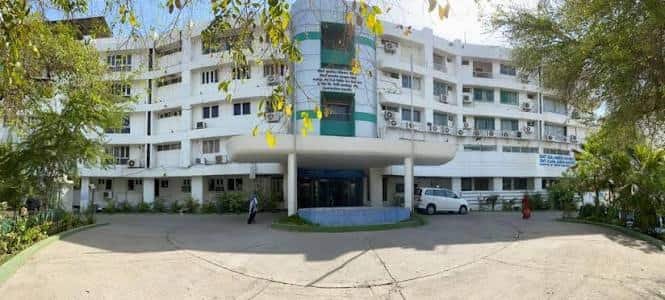
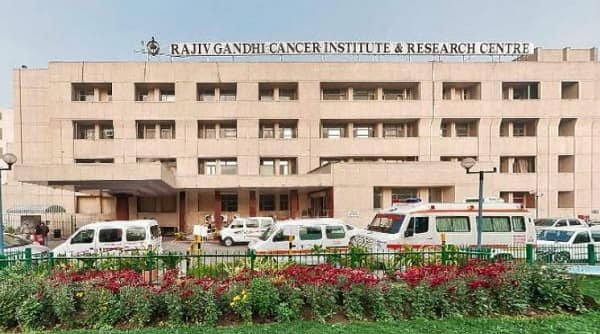
Rajiv Gandhi Cancer Institute and Research Centre was built by a group of philanthropists who, by their own account, began with no financial resources of their own. They raised the money through persistence, and in 1996 they opened a 152-bed cancer hospital in Rohini, north-west Delhi. Three decades later, RGCIRC (often called RGCI) has grown into one of Asia’s largest dedicated cancer centres. It has more than 500 beds at Rohini and a second centre at Niti Bagh in South Delhi. It is run by the not-for-profit Indraprastha Cancer Society and Research Centre. It offers surgical, medical, and radiation oncology through organ-specific teams, along with robotic surgery, bone marrow transplantation, and a dedicated paediatric cancer unit. It treats patients from across India and from neighbouring South Asian countries.
| Quick Facts | Details |
| Full name | Rajiv Gandhi Cancer Institute & Research Centre (RGCIRC) |
| Main campus address | Sir Chotu Ram Marg, Sector 5, Rohini Institutional Area, Rohini, New Delhi 110085, India |
| Second centre | Niti Bagh, South Delhi (opened 2016) |
| Run by | Indraprastha Cancer Society and Research Centre (ICSRC), a not-for-profit society formed in 1994 |
| Began functioning | 1 July 1996 (soft opening by Smt. Sonia Gandhi) |
| Formally inaugurated | 20 August 1996, by President Dr. Shankar Dayal Sharma |
| Starting capacity | 152 beds |
| Current capacity | 500+ beds at Rohini; about 30 at Niti Bagh |
| Type | Not-for-profit, dedicated cancer hospital |
| Care model | Organ-specific multidisciplinary teams with a Tumour Board |
| Key technology | Robotic surgery (including da Vinci), IMRT and IGRT radiotherapy, bone marrow transplant unit, molecular diagnostics, NanoKnife |
| Special units | Paediatric oncology, leukaemia and bone marrow transplant, preventive oncology |
| Accreditations | NABH (hospital), NABL (laboratory), NABH-accredited blood bank, NABH Nursing Excellence; ISO 9001 and ISO 14001 certifications |
| Medical Director | Dr. Sudhir Kumar Rawal, surgical oncologist |
| Patient volume | Around 60,000 patients a year (as reported); several lakh treated since 1996 |
| International patients | From India’s neighbouring South Asian countries and beyond |
| Nearest metro | Rohini West and Rohini East (Red Line) |
| Nearest major railway station | New Delhi, roughly 18–20 km |
| Nearest airport | Indira Gandhi International Airport, roughly 20–25 km |
| Time zone | IST, UTC+5:30 (no daylight saving) |
| Official website | rgcirc.org |
Philanthropists Without Money: How RGCI Began
In the early 1990s, cancer care in north India was limited, and many patients travelled to Mumbai for treatment. A group of Delhi philanthropists decided to build a dedicated cancer hospital in the capital. In 1994, they formed the Indraprastha Cancer Society and Research Centre under the Societies Registration Act. The society’s aims included patient care and research into cancer’s incidence, causes, and prevention.
The founders describe themselves as having had no financial resources of their own at the start. They raised funds for the hospital through hard work and determination. The institute:
- Began functioning on 1 July 1996, with a soft opening by Smt. Sonia Gandhi
- Was formally inaugurated on 20 August 1996 by the then President of India, Dr. Shankar Dayal Sharma
- Opened with 152 beds
- Grew to more than 500 beds at Rohini and added a centre at Niti Bagh in South Delhi in 2016
It is named after former Prime Minister Rajiv Gandhi.
Rohini and Niti Bagh: Two Delhi Centres
Rohini (Main Campus)
The main hospital is on Sir Chotu Ram Marg in the Rohini Institutional Area, Sector 5, in north-west Delhi.
- By metro: Rohini West and Rohini East stations on the Red Line are the nearest, a short auto or e-rickshaw ride away.
- From New Delhi Railway Station: Roughly 18–20 km, 45 minutes to an hour by road.
- From IGI Airport: Roughly 20–25 km, around 45 minutes to an hour depending on traffic.
- From Haryana and Punjab: North-west Delhi is easy to reach from GT Karnal Road and the outer ring roads.
Niti Bagh (South Delhi)
The Niti Bagh centre, opened in 2016, gives patients in South Delhi a nearer option for consultations and some treatments. Check which services are available there before visiting.
How Care Is Organised: Site-Specific Teams and the Tumour Board
RGCI organises its specialists into site-specific teams, each focused on cancers of one part of the body, such as breast, lung, head and neck, gastrointestinal, gynaecological, urological, or blood cancers.
For patients, this means:
- Surgeons, medical oncologists, and radiation oncologists who focus on your type of cancer and see many similar cases
- A Tumour Board, where specialists from different fields review complex cases together and agree on a treatment plan. It also serves as a second-opinion forum.
- Coordinated treatment, so surgery, chemotherapy, and radiation are planned in the right order
Treatment Technology
Robotic Surgery
RGCI was among the early adopters of robotic cancer surgery in India, using systems such as the da Vinci robot. Robotic surgery allows very precise movements through small incisions, which can mean less blood loss and faster recovery for suitable patients, particularly in urological, gynaecological, and some gastrointestinal cancers.
In 2024, the hospital’s medical director, Dr. Sudhir Kumar Rawal, led clinical trials of telesurgery using the Indian-made SSI Mantra surgical robot. A surgeon in Gurugram operated on a patient at RGCI’s Rohini theatre, about 40 km away.
Advanced Radiotherapy
- IMRT (Intensity-Modulated Radiotherapy): Shapes radiation to fit the tumour closely while limiting damage to nearby healthy tissue
- IGRT (Image-Guided Radiotherapy): Uses imaging before each session to position the patient accurately
- Modern linear accelerators, including TrueBeam-class systems, for precise delivery
Bone Marrow Transplant
Dedicated leukaemia and bone marrow transplant units treat blood cancers such as leukaemia, lymphoma, and myeloma.
NanoKnife
In 2013, RGCI introduced NanoKnife, also called irreversible electroporation. It uses electrical pulses to destroy tumour cells. It is used for selected tumours, sometimes in locations where heat-based treatments could damage nearby structures.
Molecular Diagnostics
Molecular laboratories test tumours for genetic changes that help doctors choose targeted therapies and immunotherapies.
Children and Teenagers
RGCI runs a dedicated paediatric oncology unit, described as the first of its kind in north India, for children and teenagers with cancers and blood disorders. Childhood cancers, especially leukaemia, often have good cure rates with complete treatment, and child-friendly care helps families manage the long treatment period.
Quality Credentials
- NABH accreditation for the hospital
- NABL accreditation for the laboratory
- NABH-accredited blood bank
- NABH Certificate for Nursing Excellence
- ISO 9001 (quality management) and ISO 14001 (environmental management) certifications
- Environmental awards, including recognition for green practices
It has also regularly appeared in national rankings of India’s best oncology hospitals.
Coming from Abroad
RGCI treats many patients from Nepal, Bangladesh, Afghanistan, Bhutan, Sri Lanka, and other countries.
- Contact the international patient team before travelling, with your biopsy report and scans.
- Apply for an Indian medical visa, usually with an invitation letter from the hospital. Attendants apply for a medical attendant visa.
- Bring original biopsy slides and blocks if possible, so pathologists can confirm the diagnosis.
- Plan for a long stay. Cancer treatment can take weeks or months, so arrange nearby accommodation.
- Get a written treatment plan and estimate before starting.
Choosing a Treatment Plan: Questions for Families
- What type and stage of cancer is it?
- Is the goal to cure, to control the disease, or to relieve symptoms?
- What are the options (surgery, chemotherapy, radiation, targeted therapy, immunotherapy), and in what order?
- What are the common side effects, and how will they be managed?
- How long will treatment take, and how often will I need to visit?
- What will it cost in total, including tests, medicines, and follow-up?
- Is a clinical trial available that might suit my situation?
- Can my case be discussed at the Tumour Board?
Frequently Asked Questions
Q1. What is the address of Rajiv Gandhi Cancer Institute?
Sir Chotu Ram Marg, Sector 5, Rohini Institutional Area, Rohini, New Delhi 110085.
Q2. When was Rajiv Gandhi Cancer Institute established?
It began functioning on 1 July 1996 and was formally inaugurated on 20 August 1996.
Q3. Who runs Rajiv Gandhi Cancer Institute and Research Centre?
The Indraprastha Cancer Society and Research Centre, a not-for-profit society formed in 1994.
Q4. How many beds does RGCI have?
It has more than 500 beds at Rohini and about 30 at the Niti Bagh centre.
Q5. Does RGCI have a branch in South Delhi?
Yes. Its second centre is at Niti Bagh, opened in 2016.
Q6. Does Rajiv Gandhi Cancer Institute offer robotic surgery?
Yes. It offers robotic cancer surgery, including with the da Vinci system.
Q7. Does RGCI do bone marrow transplants?
Yes. It has dedicated leukaemia and bone marrow transplant units.
Q8. Is Rajiv Gandhi Cancer Institute NABH accredited?
Yes. It is NABH accredited, with NABL laboratory accreditation and an NABH-accredited blood bank.
Q9. Does RGCI treat children with cancer?
Yes. It has a dedicated paediatric oncology unit for children and teenagers.
Q10. Which metro station is nearest to Rajiv Gandhi Cancer Institute?
Rohini West and Rohini East stations on the Red Line.