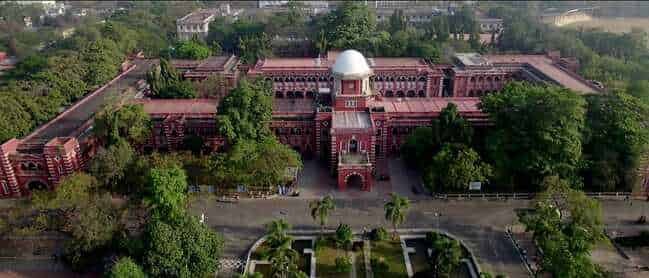
ICAR National Research Centre for Banana works on a fruit that India grows more of than any other country. India is the world’s largest banana producer, and millions of farming families depend on the crop. They face serious risks, from devastating diseases to price swings. The centre, known as ICAR-NRCB, was set up on 21 August 1993 on Thogamalai Road at Thayanur, near Tiruchirappalli (Trichy) in Tamil Nadu. It is India’s only national research institute devoted entirely to bananas and plantains. It maintains the national banana gene bank, develops improved varieties and farming methods, fights banana diseases, and helps farmers and entrepreneurs make more from the crop. In April 2026, a new Banana Field Gene Bank was inaugurated on the campus under an initiative of the Protection of Plant Varieties and Farmers’ Rights Authority.

| Quick Facts | Details |
| Full name | ICAR–National Research Centre for Banana (ICAR-NRCB) |
| Address | Thogamalai Road, Thayanur Post, Tiruchirappalli, Tamil Nadu 620102, India |
| Established | 21 August 1993 |
| Parent body | Indian Council of Agricultural Research (ICAR), under the Department of Agricultural Research and Education, Ministry of Agriculture & Farmers Welfare |
| Director (as of 2026) | Dr. S. Uma |
| Mission | Raising banana and plantain production and productivity through basic and strategic research |
| Thrust areas | Crop improvement, crop production, crop protection, post-harvest management |
| Laboratories | Tissue culture, biotechnology, soil science, nutrient management, physiology, biochemistry, entomology, nematology, fungal, bacterial and viral pathology, post-harvest technology |
| Gene bank | Manages the national banana gene bank; Banana Field Gene Bank (PPV&FRA initiative) inaugurated 27 April 2026 |
| Farmer training | Programmes including “Banana Farmers to Banana Experts” (BF-BE) |
| Academic role | Supports postgraduate and doctoral research |
| Phone | 0431-2618125 |
| Distance from Trichy Junction | About 15 km |
| Nearest airport | Tiruchirappalli International Airport, roughly 15–20 km |
| Time zone | IST, UTC+5:30 (no daylight saving) |
| Official website | nrcb.icar.gov.in |
Why India Needs a Banana Research Centre
Bananas matter in India well beyond the fruit bowl:
- Food and nutrition: Bananas are among the cheapest and most widely eaten fruits in the country, and cooking bananas and plantains are staples in parts of South India.
- Livelihoods: Millions of small farmers, traders, and workers depend on banana cultivation and trade.
- Culture: Banana leaves, stems, and flowers are used in cooking, festivals, and rituals, especially in Tamil Nadu, Kerala, and Karnataka.
- Industry: Banana fibre, flour, chips, and processed products provide extra income.
The crop also faces serious threats:
- Diseases such as Fusarium wilt (Panama disease), bunchy top virus, and leaf spot diseases
- Pests such as nematodes and weevils
- Climate stress from heat, drought, floods, and strong winds that topple plants
- Post-harvest losses from poor handling, storage, and ripening practices
NRCB was created to tackle these problems through research focused entirely on bananas.
Thogamalai Road, Tiruchirappalli
The centre is at Thayanur, on Thogamalai Road, on the outskirts of Tiruchirappalli. This part of Tamil Nadu, along the Kaveri river, is one of the country’s traditional banana-growing regions.
- From Tiruchirappalli Junction: About 15 km, usually 30–40 minutes by road.
- From Trichy airport: Roughly 15–20 km.
- From Chathiram bus stand: A cab or local bus towards Thogamalai.
- Visiting: The centre is a research institute, so contact it in advance for training, farmer visits, or meetings with scientists.
Research Divisions
NRCB’s work is organised around four thrust areas:
Crop Improvement
- Collecting, conserving, and studying banana diversity
- Breeding and selecting improved varieties with higher yield, better quality, or disease resistance
- Using biotechnology to support banana breeding
Crop Production
- Soil and nutrient management
- Water-saving methods such as drip irrigation and fertigation
- Planting density, intercropping, and cultivation practices
- Crop physiology, including how bananas respond to heat, drought, and other stresses
Crop Protection
- Diagnosing and managing fungal, bacterial, and viral diseases
- Managing insect pests and nematodes
- Developing integrated, eco-friendly control methods
Post-Harvest Management
- Better harvesting, handling, and ripening methods
- Reducing losses between farm and market
- Value addition, such as flour, chips, fibre products, and other processed goods
Laboratories
| Laboratory | Focus |
| Tissue culture | Mass production of disease-free planting material |
| Biotechnology | Molecular tools for breeding and diagnosis |
| Soil science and nutrient management | Soil health and fertiliser use |
| Physiology and biochemistry | Plant growth, stress responses, fruit quality |
| Entomology | Insect pests of banana |
| Nematology | Microscopic worms that damage banana roots |
| Plant pathology (fungal, bacterial, viral) | Diagnosing and managing banana diseases |
| Post-harvest technology | Storage, ripening, and processing |
The National Banana Gene Bank
Bananas come in far more varieties than most people realise, including sweet dessert bananas, cooking plantains, red bananas, hill bananas, and many wild relatives. NRCB manages the national banana gene bank, conserving this diversity for breeding and research.
In April 2026, a Banana Field Gene Bank was inaugurated at the centre under an initiative of the Protection of Plant Varieties and Farmers’ Rights Authority (PPV&FRA). Conserving traditional varieties helps protect farmers’ rights, supports future breeding for disease resistance, and preserves India’s agricultural heritage.
Services for Farmers and Entrepreneurs
- Technical advice on varieties, planting, nutrition, irrigation, and pest and disease control
- Training programmes, including the “Banana Farmers to Banana Experts” (BF-BE) initiative, which combines theory and practice to help farmers understand the science behind cultivation
- Disease diagnosis, such as identifying viral and fungal problems in samples
- Tissue culture support, guidance on using clean, disease-free planting material
- Post-harvest and value-addition technology for entrepreneurs and farmer producer organisations
- Publications and advisories in English and regional languages
Tip for farmers: Always buy tissue culture plants from certified sources. Infected planting material is one of the main ways diseases like bunchy top spread from farm to farm.
Common Banana Problems Farmers Ask About
| Problem | What It Looks Like | General Approach |
| Fusarium wilt (Panama disease) | Yellowing and wilting of older leaves, and brown streaks inside the pseudostem | Use resistant varieties and clean planting material, and avoid moving infected soil |
| Bunchy top virus | Stunted plants with bunched, narrow leaves | Remove infected plants, control aphids, and use virus-free plants |
| Sigatoka leaf spot | Streaks and spots on leaves that turn brown | Remove affected leaves, keep good spacing, and apply recommended sprays |
| Nematodes | Poor root growth, toppling plants | Use clean planting material, crop rotation, and organic amendments |
| Stem and corm weevils | Tunnels in the stem or corm, weak plants | Field sanitation, trapping, and integrated pest management |
For accurate diagnosis and region-specific advice, contact NRCB or your local Krishi Vigyan Kendra (KVK).
Frequently Asked Questions
Q1. Where is ICAR-NRCB located?
On Thogamalai Road, Thayanur Post, Tiruchirappalli, Tamil Nadu 620102.
Q2. When was the National Research Centre for Banana established?
It was established on 21 August 1993.
Q3. Which organisation runs NRCB?
The Indian Council of Agricultural Research (ICAR).
Q4. Who is the Director of ICAR-NRCB?
Dr. S. Uma is listed as Director as of 2026.
Q5. What are the main research areas of NRCB?
Crop improvement, crop production, crop protection, and post-harvest management.
Q6. Does NRCB have a banana gene bank?
Yes. It manages the national banana gene bank, and a new field gene bank was inaugurated in April 2026.
Q7. Does NRCB train farmers?
Yes. It runs training programmes, including the “Banana Farmers to Banana Experts” initiative.
Q8. What is the phone number of NRCB Trichy?
Call 0431-2618125.
Q9. How far is NRCB from Trichy railway station?
It is about 15 km away.
Q10. Why is banana research important in India?
India is the world’s largest banana producer, and the crop supports millions of farmers but faces serious disease, climate, and post-harvest challenges.